

Musical Welcome
Welcome from the Congress Chairs:
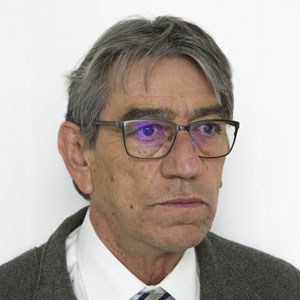
Prof Francisco Castro (CEIT, Spain)
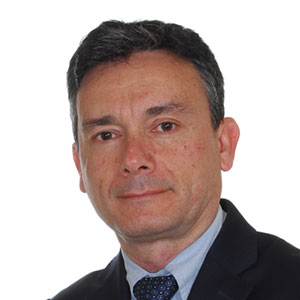
Mr Manel Pérez Latre (PMG Polmetasa S.A.U., Spain)
Welcome from the EPMA President
The European PM Industry – Current Status
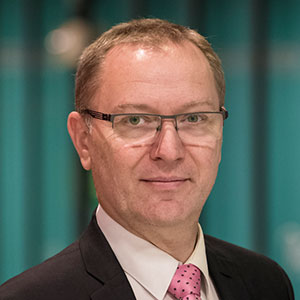
Mr Philippe Gundermann (EPMA President)
Official Opening and Welcome to the Basque Country

Lehendakari Iñigo Urkullu Renteria (President, Basque Government, Spain)
Presentation of the 2018 EPMA Awards
- PM Thesis Competition (sponsored by Höganäs AB)

- Keynote Paper Awards (sponsored by the journal Powder Metallurgy)

- PM Component Awards
- Fellowship Award 2018
Plenary Speakers
Smart Factory: Real Opportunities Applied to Powder Metallurgy

Mr Borja Arenaza Latorre (Director of Advanced Manufacturing, Sisteplant, Spain)
The ultimate goal for our manufacturing processes has historically been to generate the intended output at the defined production rates. For this purpose, the companies have engaged in activities to establish robust operating conditions and to define key monitoring indicators that would allow the early detection of trends or fluctuations, which may lead to the generation of undesired output. This goal has been achieved in the past with a certain degree of success by applying the existing mathematical and statistical tools depending on the human talent, expertise, and time that the organizations have been able to devote to each case.
The development of the technology in terms of sensors, communication, data storage, computing power and speed open new opportunities to use these well known mathematical and statistical tools to analyse the behavior of existing processes, learn about them, monitor them and, ultimately, predict deviations in the output before they actually happen. All this can be set in a close loop that would allow us to continue learning and improving in a continuous manner. This does not mean that these tools can replace the human talent and expertise in our organizations but rather define different sets of skills and roles to achieve the goal.
In the presentation, we will discuss the basic concepts, needed resources and some examples of application with the results and benefits for the organization. Eventually, we will run a brief exercise of what could be a potential implementation of these concepts to the conventional PM processes for structural parts.
The Future of the Automotive Supply Industry
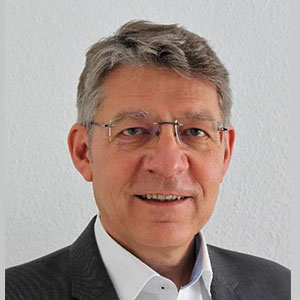
Mr Frank Schlehuber (Senior adviser Aftermarket, CLEPA, Belgium)
The European automotive supply industry is a global leader due to its innovative capacity and agility in the face of change. Nowadays, there are five megatrends shaping the automotive industry: electrification, connectivity, autonomous driving, advanced manufacturing, and advanced materials. These trends reflect both constant technological advancement as well as environmental and as societal realities.
Decarbonisation, being the principal driver for a number of these trends, has become a primary priority for OEMs and suppliers alike and has a profound impact on all levels of the supply chain, from developing alternative powertrain solutions for electric and electrified vehicles with higher autonomy, to the creation of advanced lightweight materials. CLEPA actively offers expertise to EU Institutions and national governments to achieve the goals set out in legislations while limiting irreversible disruptions. All pathways to low-carbon mobility must be promoted in a technology neutral manner.
In an ever-changing environment of challenges and opportunities, the automotive suppliers thrive providing technology solutions. Further innovative prowess is expected from the creation of new partnerships and cooperation across all tiers of the supply chain as well as with other sectors.


